
Spreading Fertiliser Safely
Important tips for safety
Fertiliser spreading involves hazardous tasks, including, tractor and machine operation, mechanically or physically lifting loads and handling chemical substances. Identifying hazards and controlling risks is crucial to prevent injury and ill health.
Injury Risk
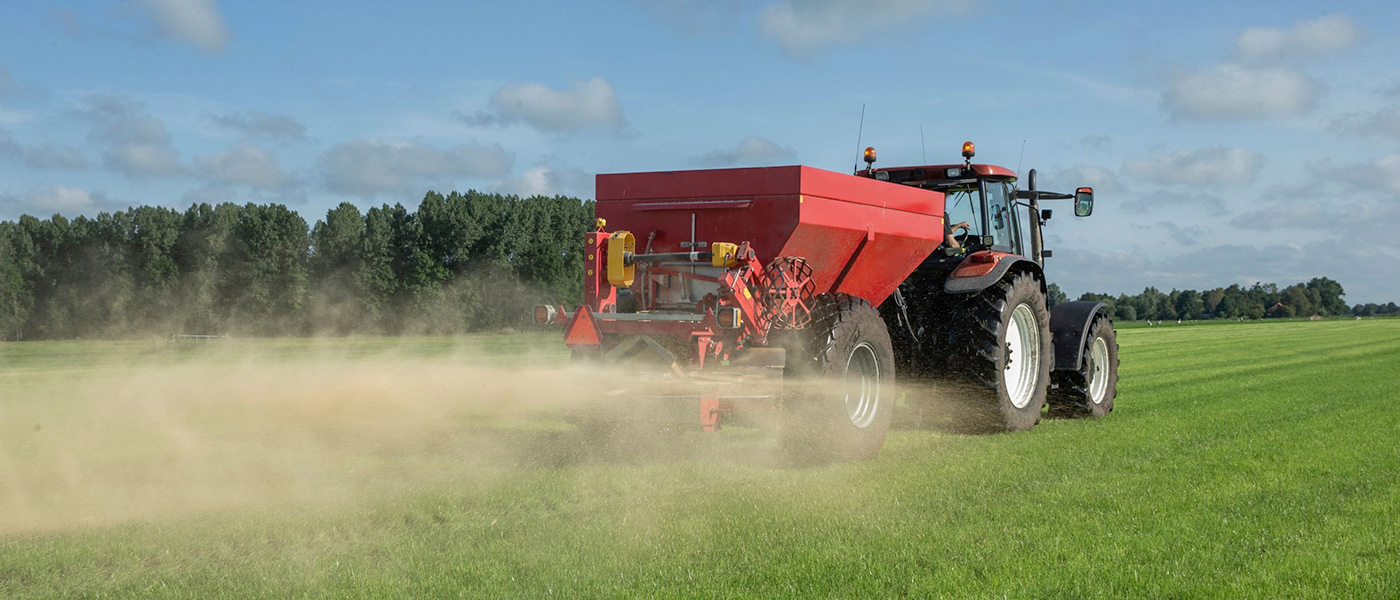
Tractors, vehicles and machinery account for about 50% of farm workplace fatalities. Spreading fertiliser is highly mechanised and is a high risk activity. Fatal or serious injuries can occur due to being crushed, struck or becoming entangled in a power drive. Safetl attention is particularly needed when operating in the farmyard and on roads.
Managing your time
Doing farm work in a hurry is a major injury factor. Fertiliser is spread at busy times. Consider using a contractor to spread some, or all, of your fertiliser.
Bulk or ‘big bag’ options minimise the need for manual lifting and saves time. Use safe lifting equipment. If manually lifting small fertiliser bags, use safe lifting techniques.
Maintenance
It is important to carry out a thorough check of your fertiliser spreader. Follow the operator’s manual and make sure the PTO shaft, PTO cover , safety chains and O guard are in good condition.
Check the general structural integrity of the machine. Ensure that a contractor has safe equipment and operates safely.
Protect your skin and eyes
Take steps to avoid direct contact of fertiliser products with skin and eyes. The corrosive nature of fertiliser can irritate skin especially when you have cuts or grazes.
Always wear protective gloves. It is also good practice to wear a mask to prevent dust entering the lungs. Protect sharp knives to prevent cuts when not in use.

Discover our
NitroFert Fertilisers
For over 25 years, NitroFert has been a leading supplier of fertiliser in Ireland. We manufacture and distribute a complete range of fertilisers to the agricultural industry.
We also provide specific customised blends according to customer requirements. Please contact us with any queries you may have about our products and blends.
 Sign up to our newsletter for the latest news, farming tips and guidance.